A few years ago, water was a topic mostly associated with climate change, droughts, and agriculture.
Today, a new consumer has entered the race for freshwater.
Artificial Intelligence.
Every day, millions of people ask AI to write emails, generate images, solve coding problems, and answer questions. Behind every response sits a massive network of servers running inside giant data centers.
Most people see AI as software.
Very few see the water.
And that may become one of the biggest environmental questions of the next decade.
The Story Nobody Sees
Imagine a city already struggling with water shortages.
Residents are asked to save water.
Farmers are worried about rainfall.
Groundwater levels continue to fall.
Then a massive data center arrives.
Rows of servers operate 24 hours a day.
Those servers generate enormous heat.
Heat must be removed.
And removing heat often requires water.
Lots of it.
The irony is difficult to ignore.
The same technology promising to build humanity’s future may be increasing pressure on one of humanity’s oldest resources.
Why AI Needs Water
AI models require powerful chips.
Powerful chips create heat.
Heat damages hardware.
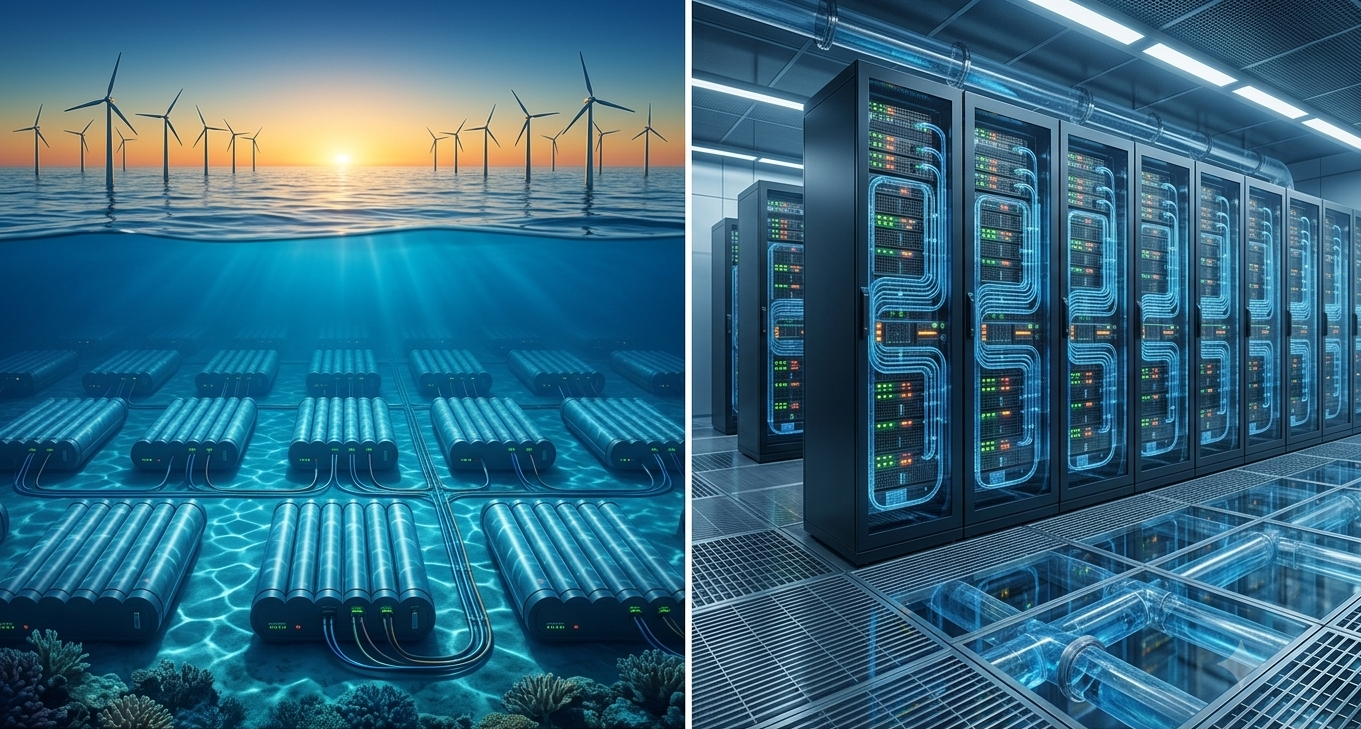
To keep systems running, data centers use sophisticated cooling systems.
Many facilities rely on water-based cooling because water is highly effective at absorbing heat.
The larger the AI boom becomes, the larger the cooling challenge becomes.
What the Numbers Tell Us
| Metric | Estimated Value |
|---|---|
| Global AI data center water consumption (2025) | Nearly 1 trillion liters |
| Daily water usage | Around 550 million gallons |
| Equivalent annual water use | About 1.8 million people |
| Large hyperscale facility | Up to millions of gallons per day |
| Google data center water use (2024) | 8.1 billion gallons |
These figures vary depending on cooling technology, location, and measurement methods, but one trend is clear:
AI infrastructure is becoming a major consumer of water resources.
The India Question
Now consider India.
Several cities have already faced severe water stress in recent years.
Groundwater levels continue to decline in many regions.
Rapid urbanization is increasing demand.
Industrial consumption is rising.
At the same time, India is positioning itself as a future hub for AI infrastructure, cloud computing, and digital services.
That creates a difficult question.
Can a country facing periodic water shortages support a massive expansion of water-hungry digital infrastructure?
The answer is not yet clear.
The Business Perspective
Technology companies argue that AI is essential.
They are not wrong.
AI is transforming healthcare, education, logistics, research, manufacturing, and customer service.
Governments want AI growth.
Businesses want AI growth.
Investors want AI growth.
Consumers want faster AI.
Everyone wants the benefits.
Very few discuss the cost.
What Big Tech Says
To be fair, the story is not entirely negative.
Companies such as Microsoft, Google, and Amazon are investing in advanced cooling technologies designed to reduce water consumption.
Some newer AI facilities use closed-loop cooling systems that recycle water instead of continuously consuming fresh supplies.
Microsoft has even claimed some of its latest designs dramatically reduce water requirements compared with older facilities.
This shows that the industry understands the problem.
The real challenge is scale.
Even if individual facilities become more efficient, total demand may continue rising as more data centers are built.
The Real Conflict: Progress vs Resources
This is not a battle between technology and nature.
It is a question of balance.
Human civilization has always consumed resources to create progress.
Factories needed coal.
Cars needed oil.
Cities needed land.
AI needs electricity and cooling.
The concern is whether growth is happening faster than sustainability solutions.
Because once groundwater disappears, rebuilding it takes years.
Sometimes decades.
Top Marketing Blog : Business vs Nature: Are We Building a Future That Cannot Survive?
What Happens If Nothing Changes?
If AI adoption continues accelerating without equivalent improvements in water efficiency:
- Water-stressed regions may face greater pressure.
- Local communities could compete with industrial users.
- Infrastructure costs may rise.
- Governments may introduce stricter regulations.
- Future data center locations may depend on water availability as much as electricity availability.
The conversation is slowly shifting from “Can we build more AI?” to “Where can we build it responsibly?”
A Future Worth Thinking About
A child opens an AI chatbot and asks a question.
The answer appears in seconds.
Simple.
Effortless.
Invisible.
But somewhere, thousands of servers worked to create that response.
Electricity was consumed.
Heat was generated.
Cooling systems were activated.
Water was used.
The user never sees any of it.
That is why the debate around AI and water matters.
Not because technology is bad.
But because every technological revolution has hidden costs.
The earlier we understand those costs, the better chance we have of building a future where innovation and sustainability grow together.
Final Thoughts
Artificial intelligence may become one of humanity’s greatest achievements.
But the success of AI should not be measured only by faster models, larger data centers, or higher valuations.
It should also be measured by whether future generations still have access to the resources that make modern life possible.
The question is no longer whether AI will change the world.
The question is whether the world can sustainably support the AI revolution.